Climate & EnvironmentBreaking
Assessment finds almost all shallow-water coral reefs at high risk of collapse by 2075
By Mantle News
Coverage spectrum
Covered by 5 outlets across the spectrum.
5 articles in total. The spectrum counts each outlet once and leaves opinion out. How we measure bias
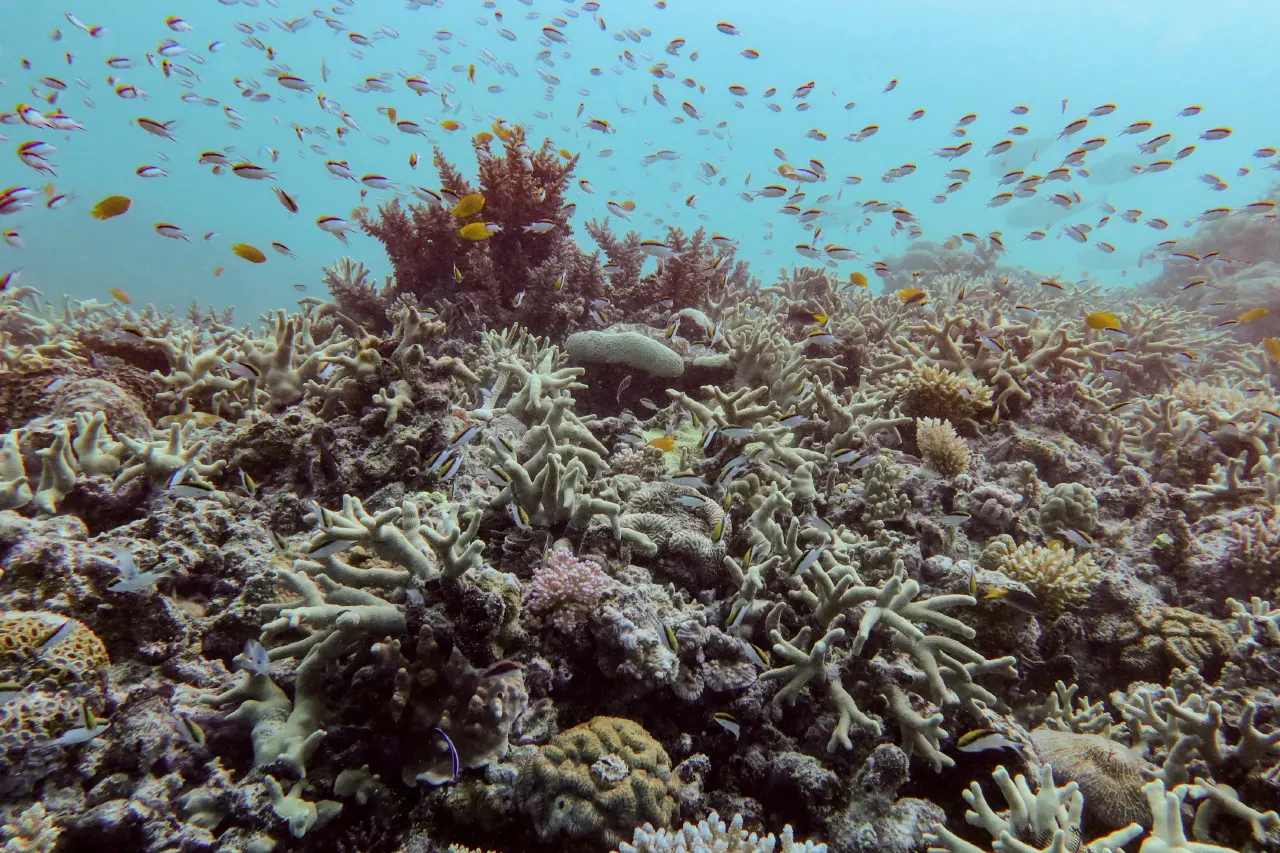
A global assessment by United Nations nature advisers, released Thursday, finds that almost all shallow-water coral reefs face a high risk of ecosystem collapse by 2075, mostly because of global heating. According to the assessment as reported by The Guardian and Deutsche Welle, 96 percent of reef systems across 80 countries are at risk, and The Guardian says the risk includes Australia's Great Barrier Reef. The Associated Press, carried by the New York Post, reports that experts say cutting pollution, overfishing and coastal development can also help reefs survive. The Washington Times reports the same warning of collapse within 50 years, citing warming oceans and heat waves.
Headline and summary written by Mantle’s AI from the coverage below, under published rules. How this works
What happened
Key points
Each point shows who reports it, from Far Left to Far Right.
A UN-linked global assessment, released Thursday, finds almost all shallow-water coral reefs face a high risk of ecosystem collapse within about 50 years, by 2075.
Reported byLeft1Center1Right2See the outletsHide the outlets
- Left
- The Guardian
- Center
- Deutsche Welle
- Right
- New York Post, The Washington Times
The assessment puts 96 percent of the world's coral reef systems at risk, across 80 countries.
Reported byLeft1Center1See the outletsHide the outlets
- Left
- The Guardian
- Center
- Deutsche Welle
The main cause cited is global heating, including warming oceans and heat waves.
Reported byLeft1Center1Right1See the outletsHide the outlets
- Left
- The Guardian
- Center
- Deutsche Welle
- Right
- The Washington Times
The assessment was made by United Nations nature advisers, with the IUCN named as the body behind the study.
Reported byLeft1Center1See the outletsHide the outlets
- Left
- The Guardian
- Center
- Deutsche Welle
The Great Barrier Reef is among the reefs facing high risk of collapse, according to the assessment.
One outletThe Guardian· Left
Experts say efforts to reduce pollution, overfishing and coastal development can help reefs survive, alongside cutting emissions.
One outletNew York Post· Right
How each side tells it
Compare views
All sides report that almost all coral reefs face a high risk of collapse, mostly from warming oceans. The left and center stress the 2075 date and a 96 percent figure, while the right stresses a 50-year window and steps beyond emissions cuts.
the left
2 outlets
Leads with the 2075 collapse date and credits UN nature advisers, naming global heating as the cause.
Almost every shallow-water coral reef on the planet faces ecosystem collapse by 2075, UN advisors say
The GuardianLeftAll left-leaning headlines the center
1 outlet
Leads with a 96 percent figure and calls the reefs critically endangered, crediting the IUCN and naming climate change as the biggest threat.
96% of world's coral reefs face critical risk of collapse, IUCN warns
Deutsche WelleCenterAll center headlines the right
2 outlets
Headlines say a study warns of collapse within 50 years; the Washington Times report stresses warming oceans and heat waves, and the Post's version is an AP report.
Almost all coral reef ecosystems face risk of collapse in 50 years, study warns
The Washington TimesRightAll right-leaning headlines
The words they chose
Language to notice
Words that carry a judgement beyond the facts. Tap a highlighted word anywhere on the page to see why.
Mantle found no loaded language in this coverage. Every headline and opening was checked against Mantle’s published word list, and Mantle’s AI read 4 of the 5 articles in context when it wrote the analysis. Straight reporting often has none.
See for yourself
Side by side
What each side leads with and what it leaves out. Open a side to read its headlines.
From the left
2 outletsLeads with
- 2075 collapse date
- UN nature advisers' assessment
- global heating
- Great Barrier Reef
See the 2 headlines from the leftHide the headlines
Almost all shallow-water coral reefs now face extinction risk, study warns
World authority on threatened wildlife classifies 96 percent of assessed coral reef systems as "critically endangered".
- The GuardianLeft
Almost every shallow-water coral reef on the planet faces ecosystem collapse by 2075, UN advisors say
Assessment finds global heating is endangering 96% of coral reefs across 80 countries – a figure scientists say should serve as a ‘wake-up call’ Sign up for climate and environment editor Adam Morton’s free Clear Air newsletter here Almost every shallow-water coral reef on the …
From the center
1 outletLeads with
- 96 percent of reefs
- critically endangered reefs
- climate change as biggest threat
- IUCN warning
See the headline from the centerHide the headlines
- Deutsche WelleCenter
96% of world's coral reefs face critical risk of collapse, IUCN warns
Almost all of the world’s shallow-water coral reefs are at risk of collapse by 2075, with climate change the biggest threat. A new study found that 96% of reef systems are critically endangered.
From the right
2 outletsLeads with
- 50-year timeline
- warming oceans and heat waves
- steps beyond emissions cuts
See the 2 headlines from the rightHide the headlines
- The Washington TimesRight
Almost all coral reef ecosystems face risk of collapse in 50 years, study warns
The world's coral reef ecosystems almost all face a high risk of collapse in the next 50 years, mostly due to warming oceans and heat waves, according to a global assessment released Thursday.
Almost all coral reef ecosystems face risk of collapse in 50 years, study warns
Beyond combatting rising global emissions, experts said efforts to reduce pollution, overfishing, and coastal development can help reefs survive.
Articles you open from here build My Mix, a private picture of how your reading spreads across the spectrum, kept on this device. What is My Mix?
The left is Far Left and Left together. The right is Right and Far Right together. Every outlet keeps its own five-point rating.
Who reported it when
How the coverage built up
Left
First to report
The Guardian, Oct 22, 8:00 AM EDT
Center
6 hr 17 min later
Its first report, Oct 22, 2:18 PM EDT
Right
2 hr 7 min later
Its first report, Oct 22, 10:08 AM EDT
See the order the outlets reported inHide the order
- The GuardianLeftOct 22, 8:00 AM EDT
- New York PostRightOct 22, 10:08 AM EDT
- The Washington TimesRightOct 22, 2:00 PM EDT
- Deutsche WelleCenterOct 22, 2:18 PM EDT
- Al Jazeera EnglishLeftOct 22, 7:32 PM EDT
Times are the ones the outlets published in their own feeds, in Eastern time. Opinion is left out.
Read next
More on Climate & Environment
Climate & EnvironmentDeveloping
Haze from Indonesian land fires prompts calls for legal action and student protests
3 outlets
More on Climate & Environment
Climate & EnvironmentBreaking
Magnitude 7.0 earthquake in China’s Tibet region kills at least 16
10 outlets
Next in today’s stories
PoliticsDeveloping
Trump calls for Rep. Ilhan Omar to resign as reports cite a different birth name
13 outlets
Next in today’s stories
WorldBreaking
White House says First Lady helped secure temporary ceasefire in Ukrainian city of Oleshky
12 outlets
A story one side mostly skipped
Crime & JusticeBreaking
Teen arrested in alleged plot to kill Rep. Keith Self, federal sources say
13 outletsQuiet on the left