ScienceBreaking
Japan launches mission to collect samples from Mars moon Phobos
By Mantle News
Coverage spectrum
Covered by 12 outlets across the spectrum.
13 articles in total. The spectrum counts each outlet once and leaves opinion out. How we measure bias
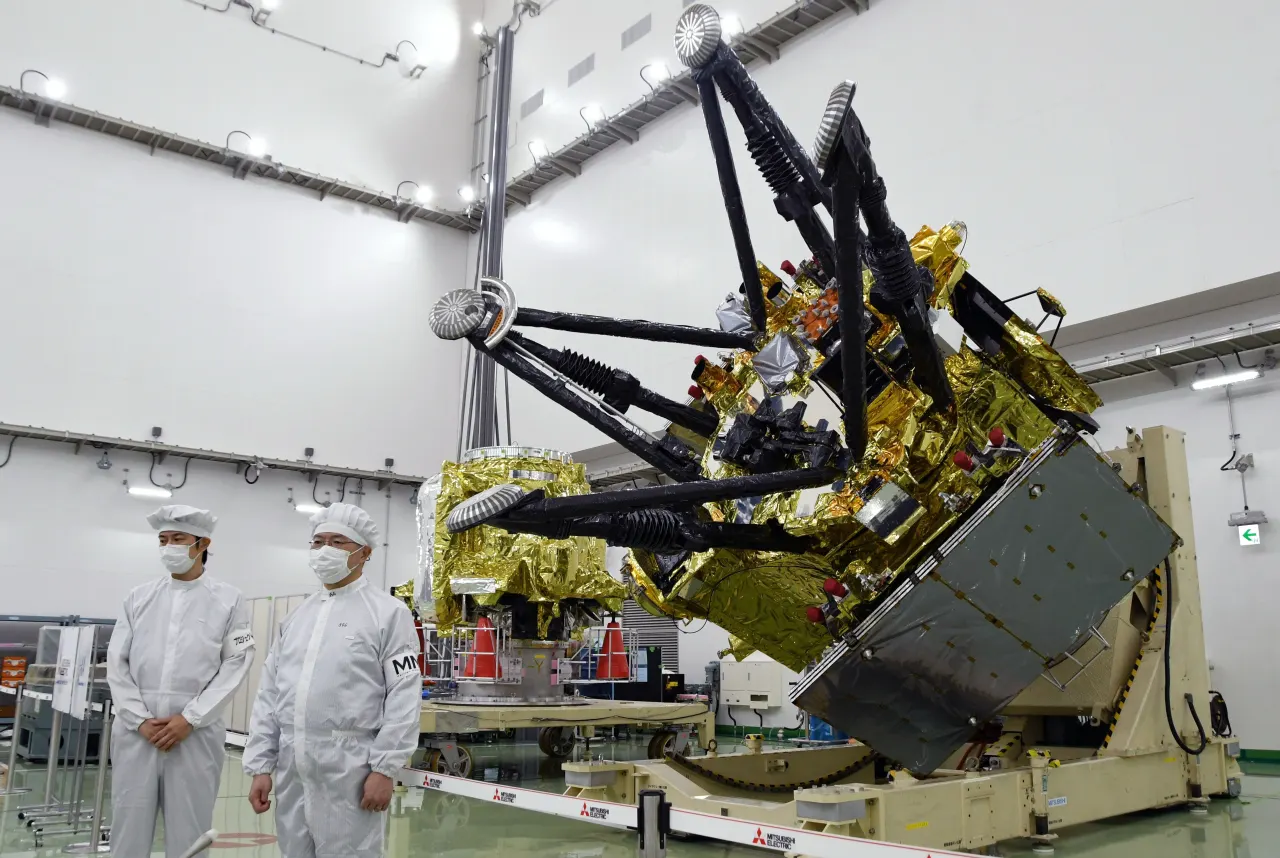
Japan has launched the Martian Moons eXploration (MMX) spacecraft toward Mars to collect samples from Phobos, the larger of the planet’s two moons, on a mission outlets describe as lasting about five years. Scientists hope the samples will help show how Phobos and its smaller sibling Deimos formed, and the project manager, Kawakatsu Yasuhiro, says the mission may shed light on the origins of life. France 24 reports a $578 million budget and a sample return in 2031, and Deutsche Welle reports the probe is expected to reach Mars in August 2027 and carry a German-French rover.
Headline and summary written by Mantle’s AI from the coverage below, under published rules. How this works
What happened
Key points
Each point shows who reports it, from Far Left to Far Right.
Japan has launched the Martian Moons eXploration (MMX) spacecraft on a roughly five-year uncrewed mission to collect samples from Phobos, Mars’ larger moon.
Reported byLeft2Center4Right1See the outletsHide the outlets
- Left
- CBS News, Al Jazeera English
- Center
- Sky News, PBS NewsHour, France 24, Deutsche Welle
- Right
- New York Post
The mission is planned to return samples to Earth in 2031 at a cost of $578 million.
One outletFrance 24· Center
Scientists hope the samples will show how Phobos and Deimos formed, and project manager Kawakatsu Yasuhiro says the mission may shed light on the origins of life.
Reported byLeft1Center1Right2Far Right1See the outletsHide the outlets
- Left
- CBS News
- Center
- France 24
- Right
- New York Post, The Washington Times
- Far Right
- Breitbart News
The spacecraft carries a German-French rover, IDEFIX, and is expected to reach Mars in August 2027.
Reported byCenter2Right1See the outletsHide the outlets
- Center
- PBS NewsHour, Deutsche Welle
- Right
- New York Post
What is contested
Where accounts differ
Points the coverage does not agree on, and who says what.
The launch date and time of the MMX spacecraft.
Breitbart said the launch was planned for Tuesday. Deutsche Welle reports the spacecraft set off late Monday, and France 24 reports the launch on Tuesday.
How each side tells it
Compare views
Every side reports that Japan launched a roughly five-year mission to collect samples from Phobos, a Mars moon. The main difference is emphasis: left and center headlines report the launch as it happened, while right-side headlines frame it as a plan or a set of questions.
the left
2 outlets
Left-side headlines report the launch as a completed event and describe the mission as ambitious or historic.
Japan launches ambitious robotic mission to Martian moon Phobos
CBS NewsLeftAll left-leaning headlines the center
7 outlets
Center headlines report the launch as a completed event, focusing on the sample return and the moons’ origins.
Japan launches mission to Mars to bring back samples from its moon
Sky NewsCenterAll center headlines the right
3 outlets
Right-side headlines frame the mission as a plan or a set of questions, with the Far Right Breitbart headline written before liftoff.
Japan Plans First Mission to Collect Rocks from Moons of Mars
Breitbart NewsFar RightAll right-leaning headlines
The words they chose
Language to notice
Words that carry a judgement beyond the facts. Tap a highlighted word anywhere on the page to see why.
Mantle found no loaded language in this coverage. Every headline and opening was checked against Mantle’s published word list, and Mantle’s AI read 12 of the 13 articles in context when it wrote the analysis. Straight reporting often has none.
See for yourself
Side by side
What each side leads with and what it leaves out. Open a side to read its headlines.
From the left
2 outletsLeads with
- the launch itself
- ambitious robotic scale
- first return of samples
Leaves out
- the $578 million cost
- the 2031 sample return date
Reported by other sides, not found in this side’s coverage.
See the 2 headlines from the leftHide the headlines
Japan launches historic mission to bring back Mars moon samples
Japan has launched a five-year uncrewed mission to collect samples from Phobos, one of Mars’ two moons.
- CBS NewsLeft
Japan launches ambitious robotic mission to Martian moon Phobos
Soil samples collected by the MMX probe will shed light on the mysterious origin of the red planet's two moons, Phobos and Deimos.
From the center
7 outletsLeads with
- the launch itself
- sample return from Phobos
- origins of the moons
See the 7 headlines from the centerHide the headlines
- Deutsche WelleCenter
Japan probe sets course for Mars moon
The MMX spacecraft is on its way to Mars' moon Phobos to collect surface samples that could help answer long-standing questions about the formation of the Solar System.
- France 24Center
Japan launches mission to explore Mars' moons and bring back samples
Japan launched a spacecraft on Tuesday on a five-year mission to explore Mars' mysterious moons, Phobos and Deimos, and bring back samples for the first time. …
Japan launches spacecraft to Mars' moon in mission to bring back soil samples
Five of the world's space agencies have joined forces for the five-year mission that will attempt to land a robotic prospector plus a rover on Phobos, the larger of Mars' two moons.
Also published by New York Post. It counts once.
- Sky NewsCenter
Japan launches mission to Mars to bring back samples from its moon
Japan launched a spacecraft towards Mars in a ground-breaking mission to bring back samples from the largest of the planet's two moons.
- Straight Arrow NewsCenter
Japan to launch historic mission to Mars’ moons, bring back first-ever soil samples
Scientists hope to finally answer a big question: did Mars capture an asteroid, or did the moons form from debris after a massive collision?
- BBC NewsCenter
Mission set to blast off for Mars to grab a piece of its moon
A spacecraft is set to launch on an ambitious mission to bring 10g of Martian moon dust back to Earth.
- Financial TimesCenter
Japan leads mission to make first return trip to Mars
Voyage due to launch early Tuesday morning Japan time will be watched for further potential signs of life on red planet
From the right
3 outletsLeads with
- mission as a plan
- rock and soil collection
- questions about the mission
Leaves out
- the $578 million cost
Reported by other sides, not found in this side’s coverage.
See the 4 headlines from the rightHide the headlines
- Breitbart NewsFar Right
Japan Plans First Mission to Collect Rocks from Moons of Mars
The Japan Aerospace Exploration Agency (JAXA) is planning to launch a spacecraft on Tuesday that will journey to Phobos and back in about five years, collecting the first-ever rock and soil samples from a moon of Mars.
- The Washington TimesRight
5 questions about Japan's mission to bring back samples from Phobos
Japan is launching the world's first mission to bring back samples from Phobos, a potato-shaped Mars moon, in hopes of revealing how Mars' moons formed and helping pave the way for future human exploration of the red planet.
Japan to launch first-ever mission to get samples from a Martian moon
Scientists hope the mission, which is expected to take five years, will provide clues to how Phobos and its smaller sibling Deimos formed, and hopefully even shed light on the origins of life in the solar system.
Japan launches spacecraft on mission to explore mysterious moons of Mars
New York Post published a report that is shown in full at PBS NewsHour. The headline is the one New York Post gave it.
Articles you open from here build My Mix, a private picture of how your reading spreads across the spectrum, kept on this device. What is My Mix?
The left is Far Left and Left together. The right is Right and Far Right together. Every outlet keeps its own five-point rating.
Who reported it when
How the coverage built up
Left
1 day 5 hr later
Its first report, Oct 19, 5:42 PM EDT
Center
11 hr 58 min later
Its first report, Oct 19, 12:00 AM EDT
Right
First to report
New York Post, Oct 18, 12:02 PM EDT
See the order the outlets reported inHide the order
- New York PostRightOct 18, 12:02 PM EDT
- Financial TimesCenterOct 19, 12:00 AM EDT
- BBC NewsCenterOct 19, 4:03 AM EDT
- Straight Arrow NewsCenterOct 19, 8:47 AM EDT
- The Washington TimesRightOct 19, 1:57 PM EDT
- Sky NewsCenterOct 19, 4:04 PM EDT
- PBS NewsHourCenterOct 19, 4:54 PM EDT
- CBS NewsLeftOct 19, 5:42 PM EDT
- Breitbart NewsFar RightOct 19, 8:09 PM EDT
- France 24CenterOct 19, 9:29 PM EDT
- Al Jazeera EnglishLeftOct 20, 12:08 AM EDT
- Deutsche WelleCenterOct 20, 3:16 AM EDT
Times are the ones the outlets published in their own feeds, in Eastern time. Opinion is left out.
Read next
More on Science
ScienceFeature
Expert says skeleton in Westminster Abbey Roman sarcophagus is likely a medieval abbot
3 outlets
More on Science
Climate & EnvironmentAnalysis
UN report says world is set to breach 1.5C warming limit
8 outletsQuiet on the right
Next in today’s stories
WorldDeveloping
Witkoff meets Putin in St. Petersburg; Kremlin says it is ready for three-way talks
17 outlets
Next in today’s stories
TechnologyBreaking
Officials warn of critical PHP flaws, prompting some websites to go offline
19 outlets
A story one side mostly skipped
PoliticsBreaking
Polling firm Wedgewood admits its midterm polls were fabricated
14 outletsQuiet on the left