Business & MarketsDeveloping
Oil tanker charter rates hit records as crude moves through Strait of Hormuz
By Mantle News
Coverage spectrum
Covered by 4 outlets, mostly center (75%).
5 articles in total. The spectrum counts each outlet once and leaves opinion out. How we measure bias
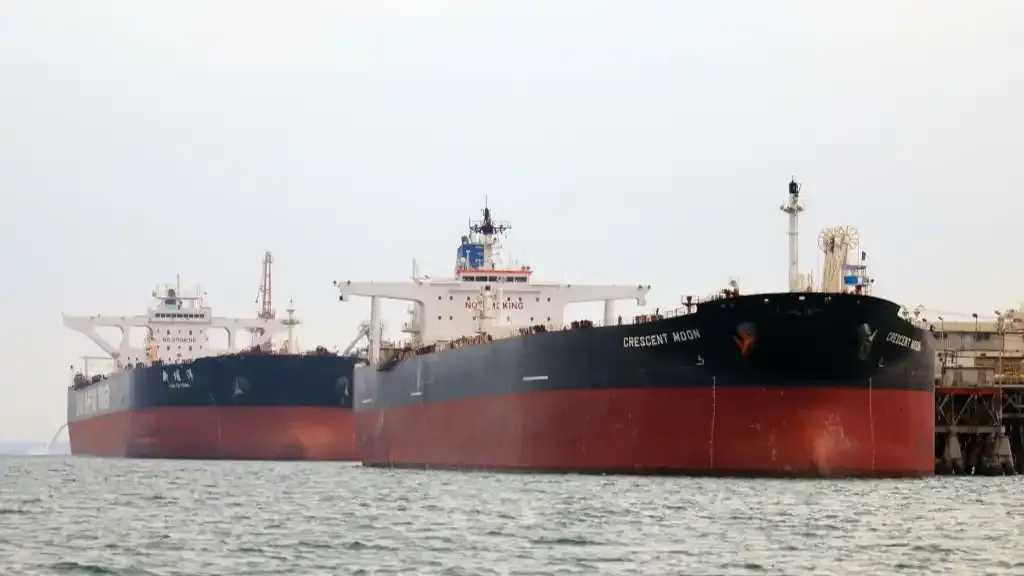
Charter rates for oil tankers have reached record levels as crude moves out of the Strait of Hormuz during the war in the Persian Gulf. According to Semafor, citing Baltic Exchange data, the cost of hiring one very large crude carrier to move US oil to Asia topped $77 million, more than 700 percent above its 2025 average. CNBC reported that a supertanker was chartered for $76 million from the US Gulf Coast to China, where a pre-war rate would have been $7 million to $10 million. Semafor reported that crude leaving the strait averaged about 10 million barrels a day over the past week, even as attacks on tankers rose. Al Jazeera, citing a Financial Times report, said some tanker captains are earning base salaries of up to $100,000 plus a $50,000 bonus per voyage through the strait.
Headline and summary written by Mantle’s AI from the coverage below, under published rules. How this works
What happened
Key points
Each point shows who reports it, from Far Left to Far Right.
Hiring one very large crude carrier to move US oil to Asia cost more than $77 million, according to Baltic Exchange data.
One outletSemafor· Center
A supertanker was chartered from the US Gulf Coast to China for $76 million, a source told CNBC; a normal pre-war rate for the route would be $7 million to $10 million.
One outletCNBC· Center
Crude exiting the Strait of Hormuz averaged about 10 million barrels a day over the past week, according to Semafor.
One outletSemafor· Center
Attacks on tankers rose across several areas, including off Qatar and in Bulgarian waters.
One outletSemafor· Center
A US oil trader reportedly took a $2 billion bet on tankers as carriers avoided the strait.
One outletFinancial Times· Center
Some tanker captains are reportedly earning base salaries of up to $100,000 plus a $50,000 bonus per voyage through the strait, according to a Financial Times report.
One outletAl Jazeera English· Left
What is contested
Where accounts differ
Points the coverage does not agree on, and who says what.
Whether more or fewer ships and barrels are moving through the Strait of Hormuz.
Al Jazeera reports that shipping traffic through the strait fell to its lowest level since July in the week it covered. Semafor reports that crude exiting the strait averaged about 10 million barrels a day over the past week, and Al Jazeera's own further text says Middle East oil exports rose above pre-war levels at the end of last month. The sources measure different things, total shipping traffic and crude exports.
How each side tells it
Compare views
the left
1 outlet
Al Jazeera's headline, The Hormuz bonus: Sailor salaries soar for transits amid Iran war, leads with crew pay and frames the strait as a site of danger tied to the Iran war; its coverage is a single article, so this is the only left-side view in the sample.
The Hormuz bonus: Sailor salaries soar for transits amid Iran war
Al Jazeera EnglishLeftAll left-leaning headlines the center
3 outlets
Center headlines focus on shipping costs and tanker supply: the Financial Times on a $2bn trader bet, CNBC on a $76 million supertanker charter, and Semafor on record tanker hiring costs and rising attacks.
Rates for oil tankers hit record high, as more crude passes through Hormuz
SemaforCenterAll center headlines the right
No coverage yet
No right-leaning outlet that Mantle follows has covered this story yet. That absence is part of the picture.
The words they chose
Language to notice
Words that carry a judgement beyond the facts. Tap a highlighted word anywhere on the page to see why.
Left1
besieged
Center2
gamblestaggering
Right
Has not covered this story.
In the outlets’ own words
Sensational language
gambleMore neutral: bet
The word presents a $2bn investment as a risky wager, a judgement the headline does not need to make.
US oil trader takes $2bn gamble on tankers as carriers steer clear of Hormuz
Used byFinancial Times (Center)
Sensational language
staggeringMore neutral: the numbers
The adjective tells the reader how to feel about the figures rather than letting the numbers speak.
The Baltic Exchange reported the staggering numbers as attacks on tankers rose across multiple theaters of war.
Used bySemafor (Center)
Loaded modifier
besiegedMore neutral: the Strait of Hormuz
The word casts the strait as under attack by a party, a characterization the excerpt does not establish.
As shipping traffic through the besieged Strait of Hormuz fell to its lowest level since July this week, reports have emerged…
Used byAl Jazeera English (Left)
See for yourself
Side by side
What each side leads with and what it leaves out. Open a side to read its headlines.
From the left
1 outletLeads with
- crew pay and per-voyage bonuses
- a besieged strait with falling traffic
- the Iran war as backdrop
Leaves out
- record tanker charter costs of $76 million to $77 million reported by center outlets
- crude exiting the strait averaging about 10 million barrels a day
Reported by other sides, not found in this side’s coverage.
See the headline from the leftHide the headlines
The Hormuz bonus: Sailor salaries soar for transits amid Iran war
Reports have emerged that tanker captains are earning $100,000 plus a $50,000 per-trip bonus to transit the strait.
From the center
3 outletsLeads with
- record charter and shipping costs
- tanker shortage and supply
- US oil flows to Asia
- attacks on tankers
Leaves out
- tanker crew pay and per-voyage bonuses for Hormuz transits
- strait traffic falling to its lowest level since July
Reported by other sides, not found in this side’s coverage.
See the 3 headlines from the centerHide the headlines
- SemaforCenter
Rates for oil tankers hit record high, as more crude passes through Hormuz
It now costs up to $77 million to hire a large tanker to move crude from the US to Asia, up from less than $10 million last year.
1 more from Semafor
- CNBCCenter
Supertanker chartered from Gulf Coast to China for $76 million, 10 times higher than pre-war level
Shipping costs have exploded as the war in the Persian Gulf has led to a shortage of available tankers.
- Financial TimesCenter
US oil trader takes $2bn Sensational language“gamble”The word presents a $2bn investment as a risky wager, a judgement the headline does not need to make.More neutral: betDisagree with this highlight? on tankers as carriers steer clear of Hormuz
American security push aims to spur Asian refining as diesel shortages stoke inflation
From the right
0 outletsNo right-leaning outlet that Mantle follows has covered this story yet. That absence is part of the picture.
Articles you open from here build My Mix, a private picture of how your reading spreads across the spectrum, kept on this device. What is My Mix?
The left is Far Left and Left together. The right is Right and Far Right together. Every outlet keeps its own five-point rating.
Who reported it when
How the coverage built up
Left
20 hr later
Its first report, Oct 8, 7:02 AM EDT
Center
First to report
Financial Times, Oct 7, 11:00 AM EDT
Right
No report yet
From the outlets Mantle follows
See the order the outlets reported inHide the order
- Financial TimesCenterOct 7, 11:00 AM EDT
- CNBCCenterOct 7, 2:50 PM EDT
- SemaforCenterOct 7, 6:30 PM EDT
- Al Jazeera EnglishLeftOct 8, 7:02 AM EDT
Times are the ones the outlets published in their own feeds, in Eastern time. Opinion is left out.
Read next
More on Business & Markets
EconomyDeveloping
Zuckerberg considered leaving California over a proposed billionaire tax
4 outlets
More on Business & Markets
Business & MarketsBreaking
Australian data center operator NextDC shares fall after cutting earnings forecast
4 outlets
Next in today’s stories
WorldDeveloping
Witkoff meets Putin in St. Petersburg; Kremlin says it is ready for three-way talks
17 outlets
Next in today’s stories
WorldBreaking
Russia frees US citizen Stephen Hubbard during US envoy Witkoff’s visit
33 outlets
A story one side mostly skipped
PoliticsBreaking
Polling firm Wedgewood admits its midterm polls were fabricated
14 outletsQuiet on the left