Government & PolicyDeveloping
Supreme Court weighs whether 1988 video privacy law covers online subscribers
By Mantle News
Coverage spectrum
Covered by 11 outlets across the spectrum.
14 articles in total, 1 of them opinion. The spectrum counts each outlet once and leaves opinion out. How we measure bias
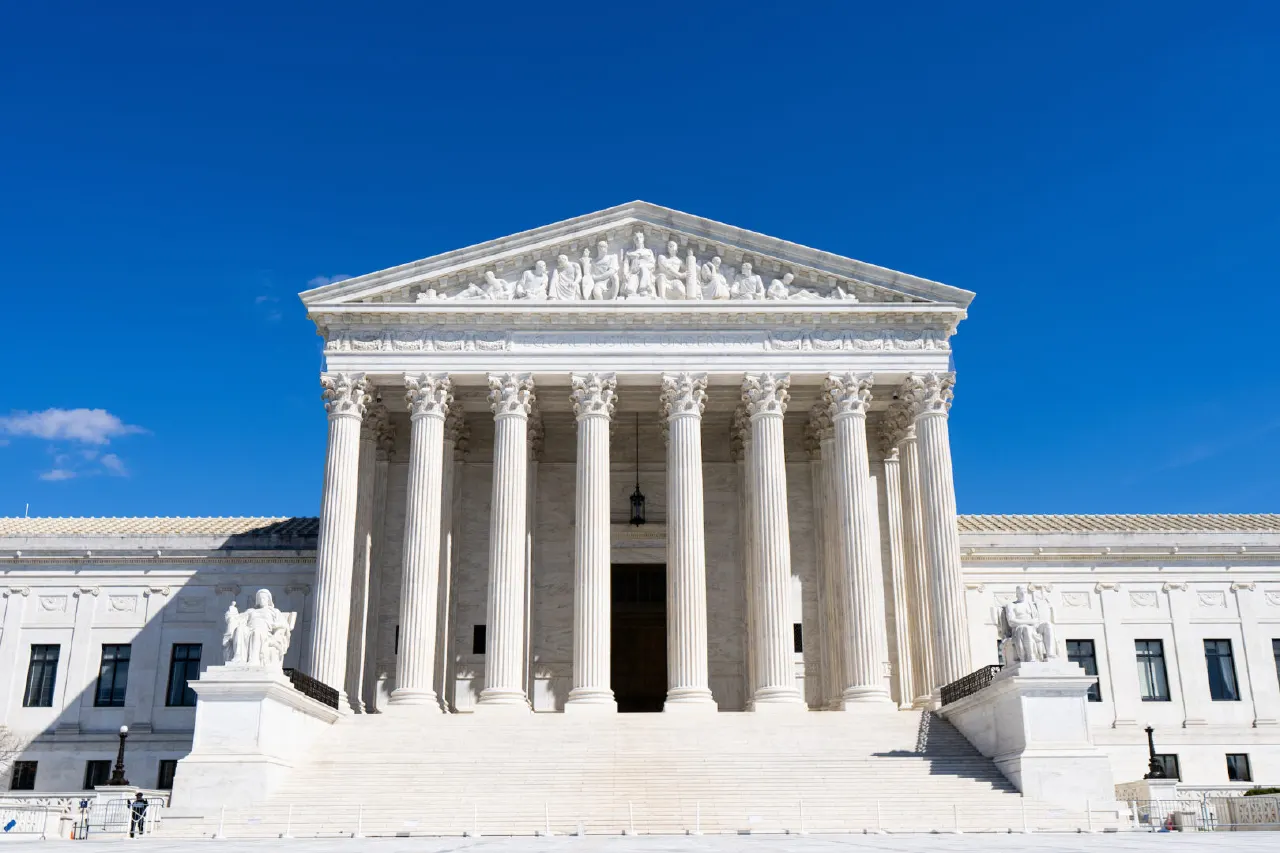
The Supreme Court heard arguments Wednesday in Salazar v. Paramount Global, testing whether a 1988 video privacy law covers consumers who subscribe to services unrelated to video. A college sports newsletter subscriber alleges that Paramount Global shared his video viewing history with Facebook. The law was passed in 1988 for video rental records and last amended in 2013. Reports differ on the court’s lean: some say justices appeared skeptical of the suit, while one says the court seems likely to side with the customer.
Headline and summary written by Mantle’s AI from the coverage below, under published rules. How this works
What happened
Key points
Each point shows who reports it, from Far Left to Far Right.
The Supreme Court heard oral arguments on Wednesday in Salazar v. Paramount Global.
Across the spectrumReported byFar Left2Center3Right1Far Right3See the outletsHide the outlets
- Far Left
- The Nation, The New Republic
- Center
- The Hill, Roll Call, Newsweek
- Right
- The Center Square
- Far Right
- The Epoch Times, Just the News, The Daily Signal
A subscriber to a college sports newsletter alleges that Paramount Global shared his video viewing history with Facebook.
Reported byFar Left1Center1Far Right1See the outletsHide the outlets
- Far Left
- The New Republic
- Center
- The Hill
- Far Right
- The Epoch Times
The justices are weighing whether the Video Privacy Protection Act protects consumers who subscribe to services that are not video content.
Reported byCenter1Far Right1See the outletsHide the outlets
- Center
- The Hill
- Far Right
- The Epoch Times
The Video Privacy Protection Act was first passed in 1988 and last amended in 2013.
Reported byFar Left1Center2See the outletsHide the outlets
- Far Left
- The Nation
- Center
- The Hill, Roll Call
Justices questioned how far the law should reach, and reports differ on which way the court appears to be leaning.
Reported byFar Left1Center1Right1Far Right2See the outletsHide the outlets
- Far Left
- The New Republic
- Center
- Roll Call
- Right
- The Center Square
- Far Right
- Just the News, The Daily Signal
What is contested
Where accounts differ
Points the coverage does not agree on, and who says what.
The justices appear likely to side with the subscriber suing Paramount Global.
The New Republic, a left-side outlet, says the court appeared likely to side with the customer and that several justices signaled they might limit such suits in future cases. The Center Square and The Daily Signal, right-side outlets, say the justices appeared skeptical of the consumer lawsuit.
How each side tells it
Compare views
Every side reports that the Supreme Court heard arguments Wednesday over whether a 1988 video privacy law covers online subscribers. Left outlets stress digital privacy stakes and predicted outcomes, center outlets the statute’s reach, and right outlets the justices’ skepticism of the suit.
the left
4 outlets · 1 opinion
Left headlines frame the case as a digital privacy issue; the Far Left Nation and New Republic state predicted outcomes or verdicts, while the Post and Times name the 1980s law.
Supreme Court Weighs Privacy Law From the Videotape Era of ‘Be Kind, Rewind’
The New York TimesLeftAll left-leaning headlines the center
3 outlets
Center headlines describe the argument neutrally, naming the 1980s statute and the question of whether subscriptions to other services are covered.
Supreme Court case pits 1980s video rental law versus modern newsletters
The HillCenterAll center headlines the right
4 outlets
Right headlines report the justices’ skepticism toward the consumer lawsuit or lead with the case name; the Far Right Daily Signal uses a Blockbuster hook.
U.S. Supreme Court appears skeptical of consumer privacy lawsuit
The Center SquareRightAll right-leaning headlines
The words they chose
Language to notice
Words that carry a judgement beyond the facts. Tap a highlighted word anywhere on the page to see why.
Left3
data-hungry tech giantsasinineDigital Privacy Victory
Center1
Laugh at
Right0
No loaded words in its own voice.
In the outlets’ own words
Loaded verb
Laugh atMore neutral: Justices React to Lawyer’s Answer in Paramount Case
The headline presents the justices’ laughter as mockery of the lawyer, while the article reports only that they laughed during the argument.
Supreme Court Justices Laugh at Lawyer's Answer in Paramount Case
Used byNewsweek (Center)
Loaded modifier
data-hungry tech giantsMore neutral: technology companies that collect user data
The adjective attributes an appetite to the companies that the reporting does not establish.
…making this up) Blockbuster Video can be used to protect us from prying, data-hungry tech giants.
Used byThe Nation (Far Left)
Loaded modifier
asinineMore neutral: an unusual use of
The writer calls the statute absurd in his own voice, passing judgement on the law’s merit rather than describing it.
Which… is asinine.
Used byThe Nation (Far Left)
Loaded modifier
Digital Privacy VictoryMore neutral: Supreme Court Appears Inclined to Rule for Customer in Privacy Case
The headline presents a predicted, undecided outcome as a win for one side, while the description says the court only appeared likely to rule that way.
The Supreme Court Is Leaning Toward a Digital Privacy Victory
Used byThe New Republic (Far Left)
See for yourself
Side by side
What each side leads with and what it leaves out. Open a side to read its headlines.
From the left
4 outlets · 1 opinionLeads with
- digital privacy stakes
- the 1980s video-store law
- predicted outcome of the case
Leaves out
- the college sports newsletter subscription at the center of the suit
Reported by other sides, not found in this side’s coverage.
See the 5 headlines from the leftHide the headlines
- The New RepublicFar Left
The Supreme Court Is Leaning Toward a Loaded modifier“Digital Privacy Victory”The headline presents a predicted, undecided outcome as a win for one side, while the description says the court only appeared likely to rule that way.More neutral: Supreme Court Appears Inclined to Rule for Customer in Privacy CaseDisagree with this highlight?
The Supreme Court appeared likely to side with a customer who invoked a semi-obscure federal law to sue Paramount for sharing his personal information with Facebook during oral arguments on Wednesday, though multiple justices signaled that they might constrain such lawsuits in …
Blockbuster-era law governing privacy of video rentals gets a fresh look from the Supreme Court
A 1988 law designed to protect the privacy of movie rentals in the age of Blockbuster Video is getting a fresh look from the Supreme Court
Supreme Court Weighs Privacy Law From the Videotape Era of ‘Be Kind, Rewind’
The justices will consider how the Video Privacy Protection Act of 1988 applies in the digital age of streaming videos, email newsletters and targeted advertisements.
Does a video store privacy law apply online? The Supreme Court will decide.
The 1980s law prohibited video stores from disclosing what their customers rented. What does it mean in the streaming era?
Is Blockbuster Video the Answer to Our Digital Privacy Woes?
Elie Mystal The Supreme Court is weighing whether a 1988 video-store law can be used to protect our digital privacy.
From the center
3 outletsLeads with
- scope of the 1988 statute
- subscription-based services
- the lawsuit against Paramount
See the 3 headlines from the centerHide the headlines
- NewsweekCenter
Supreme Court Justices Loaded verb“Laugh at”The headline presents the justices’ laughter as mockery of the lawyer, while the article reports only that they laughed during the argument.More neutral: Justices React to Lawyer’s Answer in Paramount CaseDisagree with this highlight? Lawyer's Answer in Paramount Case
The Supreme Court heard arguments Wednesday in a case that could have implications for online privacy lawsuits.
- Roll CallCenter
Justices wrestle with video privacy law from VHS era
The Supreme Court on Wednesday grappled with how far a law Congress passed to cover video rentals in the 1980s should stretch to cover the modern advertising-supported internet. …
- The HillCenter
Listen live: Supreme Court weighs reach of decades-old video privacy law
The Supreme Court will hear arguments Wednesday in a case testing whether a decades-old privacy law extends to consumers who subscribe to services unrelated to video content. …
1 more from The Hill
From the right
4 outletsLeads with
- justices’ skepticism of the lawsuit
- limits on the consumer suit
- Blockbuster-era framing
Leaves out
- implications for targeted digital advertising
Reported by other sides, not found in this side’s coverage.
See the 4 headlines from the rightHide the headlines
- The Epoch TimesFar Right
Supreme Court Weighs Reach of 1988 Video Privacy Law in Facebook Data-Sharing Case
The court is expected to decide if a free newsletter subscription triggers protections under the Video Privacy Protection Act.
1 more from The Epoch Times
- The Daily SignalFar Right
In One Type of ‘Blockbuster’ Case, Supreme Court Weighs 1980s Video Privacy Law in Digital Age
The Supreme Court heard arguments Wednesday on how a video rentals privacy law from the 1980s applies to the digital age. Justices on both sides expressed skepticism about how the 1988 Video Privacy Protection Act, enacted in the days of VHS rentals at stores such as Blockbuster …
- The Center SquareRight
U.S. Supreme Court appears skeptical of consumer privacy lawsuit
(The Center Square) - The U.S. Supreme Court appeared skeptical Wednesday during arguments over whether video consumers are protected from having data shared between online companies.
Also published by Just the News. It counts once.
U.S. Supreme Court appears skeptical of consumer privacy lawsuit
Just the News published a report that is shown in full at The Center Square.
Articles you open from here build My Mix, a private picture of how your reading spreads across the spectrum, kept on this device. What is My Mix?
The left is Far Left and Left together. The right is Right and Far Right together. Every outlet keeps its own five-point rating.
Who reported it when
How the coverage built up
Left
First to report
The Washington Post, Oct 14, 5:00 AM EDT
Center
1 hr later
Its first report, Oct 14, 6:00 AM EDT
Right
5 hr 10 min later
Its first report, Oct 14, 10:10 AM EDT
See the order the outlets reported inHide the order
- The Washington PostLeftOct 14, 5:00 AM EDT
- The New York TimesLeftOct 14, 5:01 AM EDT
- The HillCenterOct 14, 6:00 AM EDT
- The Epoch TimesFar RightOct 14, 10:10 AM EDT
- Roll CallCenterOct 14, 10:45 AM EDT
- The Center SquareRightOct 14, 12:22 PM EDT
- The Daily SignalFar RightOct 14, 1:50 PM EDT
- ABC NewsLeftOct 14, 3:49 PM EDT
- NewsweekCenterOct 14, 5:30 PM EDT
- The New RepublicFar LeftOct 16, 6:00 AM EDT
Times are the ones the outlets published in their own feeds, in Eastern time. Opinion is left out. Just the News gave only a date, so it is not placed.
Read next
More on Government & Policy
PoliticsDeveloping
Musk backs Paxton in Texas Senate race as Talarico criticizes his spending
3 outlets
More on Government & Policy
PoliticsBreaking
Democrats sue Trump and Justice Department over federal push on state voter rolls
7 outlets
Next in today’s stories
WorldDeveloping
Witkoff meets Putin in St. Petersburg; Kremlin says it is ready for three-way talks
17 outlets
Next in today’s stories
TechnologyBreaking
Officials warn of critical PHP flaws, prompting some websites to go offline
19 outlets
A story one side mostly skipped
PoliticsBreaking
Polling firm Wedgewood admits its midterm polls were fabricated
14 outletsQuiet on the left