ScienceDeveloping
NASA's Swift Observatory expected to re-enter Earth after failed rescue attempt
By Mantle News
Coverage spectrum
Covered by 3 outlets across the spectrum.
3 articles in total. The spectrum counts each outlet once and leaves opinion out. How we measure bias
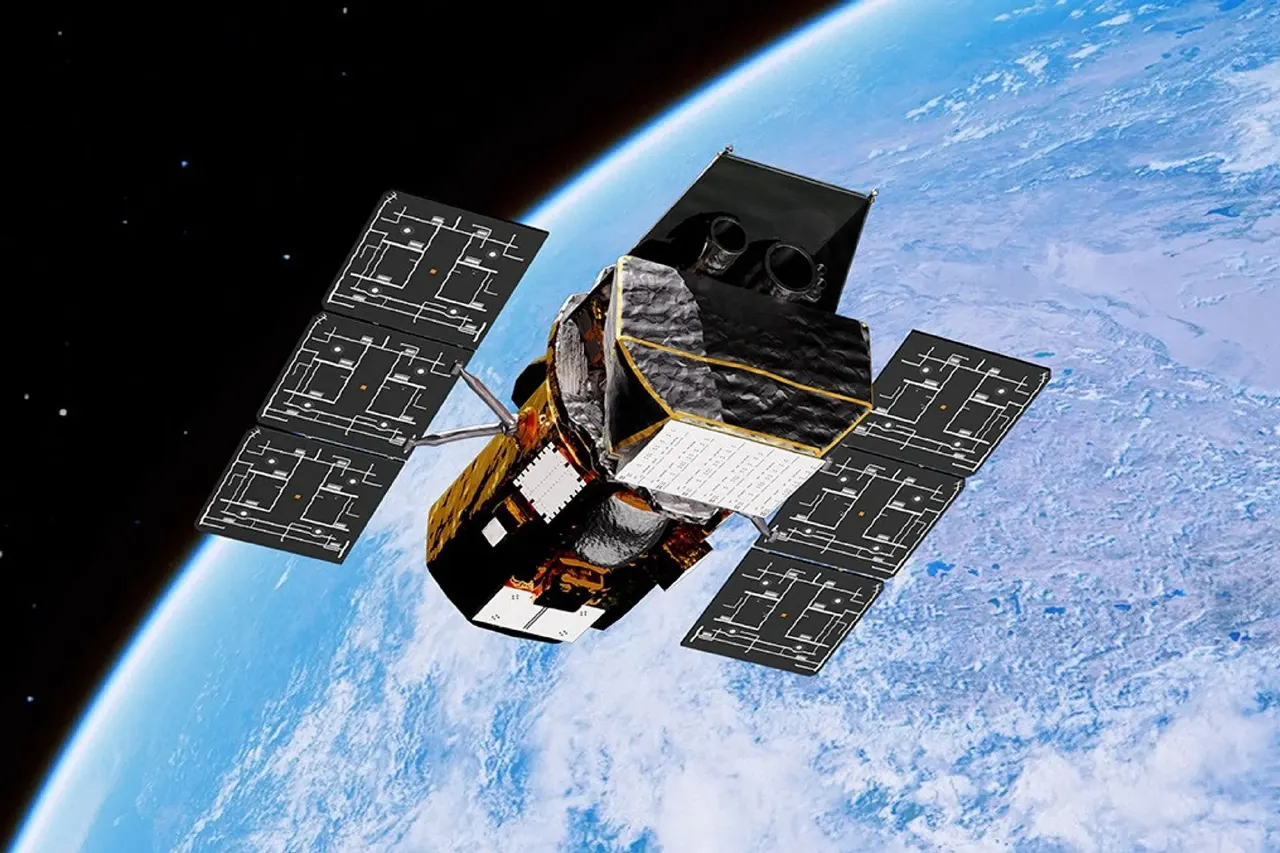
NASA's Swift Observatory, launched in 2004 to study gamma-ray bursts, is expected to re-enter Earth's atmosphere after a failed rescue attempt, according to the New York Post, NewsNation and The Guardian. The US Space Force predicts re-entry around 3:30 a.m. EST, as cited by the Post and the Guardian. The Guardian reports the spacecraft can no longer steer or observe, so its descent is uncontrolled. NASA says most of the telescope should burn up, but some pieces, including tungsten parts, could survive, and puts the risk of harm to anyone on Earth at about 1 in 2,100. NewsNation reports that the United States could bear responsibility under international law if debris causes damage.
Headline and summary written by Mantle’s AI from the coverage below, under published rules. Editors read every story. How this works
What happened
Key points
Each point shows who reports it, from Far Left to Far Right.
The failed rescue attempt has left the NASA Swift Observatory set to re-enter Earth's atmosphere.
Reported byLeft1Center1Right1See the outletsHide the outlets
- Left
- The Guardian
- Center
- NewsNation
- Right
- New York Post
The US Space Force predicts re-entry around 3:30 a.m. EST.
Reported byLeft1Right1See the outletsHide the outlets
- Left
- The Guardian
- Right
- New York Post
NASA says most of the telescope should burn up, but some pieces, including tungsten parts, could survive.
Reported byLeft1Center1Right1See the outletsHide the outlets
- Left
- The Guardian
- Center
- NewsNation
- Right
- New York Post
NASA puts the risk of harm to anyone on Earth from the re-entry at about 1 in 2,100.
Reported byLeft1Right1See the outletsHide the outlets
- Left
- The Guardian
- Right
- New York Post
NewsNation reports the United States could bear responsibility for damage from debris, as the launching state under the 1972 Convention on International Liability for Damage Caused by Space Objects.
One outletNewsNation· Center
What is contested
Where accounts differ
Questions the coverage answers differently, and who says what.
Is the telescope expected to re-enter on Wednesday?
The New York Post and The Guardian report re-entry on Wednesday, around 3:30 a.m. EST, while NewsNation says it is expected around Friday.
How each side tells it
Compare views
All three outlets report a failed rescue attempt that leaves the telescope set to re-enter Earth, with most of it expected to burn up. The Guardian stresses its science record, NewsNation US liability, and the New York Post the drama of the fall.
the left
1 outlet
The Guardian headline leads with the telescope's launch date and a plunge back to Earth after a failed rescue mission, framing the event as a descent.
Nasa telescope launched in 2004 to plunge back to Earth after failed rescue mission
The GuardianLeftAll left-leaning headlines the center
1 outlet
The NewsNation headline is a question about who could be liable for damages, framing the crash around legal responsibility rather than the event itself.
Swift Observatory: Who could be liable for damages when it crashes
NewsNationCenterAll center headlines the right
1 outlet
The New York Post headline uses the word massive and the phrase crash to Earth, with a warning tagline, giving the event a dramatic, cautionary framing.
Massive space telescope to crash to Earth after failed rescue attempt: ‘What goes up must come down’
New York PostRightAll right-leaning headlines
The words they chose
Language to notice
Words that carry a judgement beyond the facts. Tap a highlighted word anywhere on the page to see why.
Mantle found no loaded language in this coverage. Every headline and opening was checked against Mantle’s published word list, and Mantle’s AI read all 3 articles in context. Straight reporting often has none.
See for yourself
Side by side
What each side leads with and what it leaves out. Open a side to read its headlines.
From the left
1 outletLeads with
- two decades of studying cosmic explosions
- uncontrolled re-entry
- low risk of harm to people
See the headline from the leftHide the headlines
- The GuardianLeft
Nasa telescope launched in 2004 to plunge back to Earth after failed rescue mission
Neil Gehrels Swift Observatory is expected to re-enter Earth’s atmosphere Wednesday, burning up in the process Nasa’s Neil Gehrels Swift Observatory, which has spent two decades studying the most powerful explosions in the cosmos, is expected to re-enter the Earth’s atmosphere …
From the center
1 outletLeads with
- possible US liability under international law
- debris that could survive re-entry
- a failed rescue effort
Leaves out
- the estimated risk of harm to people of about 1 in 2,100
Reported by other sides, not found in this side’s coverage.
See the headline from the centerHide the headlines
- NewsNationCenter
Swift Observatory: Who could be liable for damages when it crashes
(NewsNation) — An aging NASA telescope is set to come crashing back to Earth after a failed rescue effort, with the possibility of some debris making it through the atmosphere. If debris causes damage on Earth, the United States could bear responsibility. The U.S. …
From the right
1 outletLeads with
- a dramatic crash to Earth
- tungsten pieces that could survive
- a failed rescue attempt
See the headline from the rightHide the headlines
- New York PostRight
Massive space telescope to crash to Earth after failed rescue attempt: ‘What goes up must come down’
The 3,200-pound Swift Observatory will plummet toward earth around 3:30 a.m. ET, Space Force predicts.
The stories you read build My Mix, a private picture of which sides cover the stories you choose, kept on this device. What is My Mix?
The left is Far Left and Left together. The right is Right and Far Right together. Every outlet keeps its own five-point rating.
Who reported it when
How the coverage built up
Left
First to report
The Guardian, Nov 3, 2:50 PM EST
Center
17 min later
Its first report, Nov 3, 3:07 PM EST
Right
1 hr 59 min later
Its first report, Nov 3, 4:49 PM EST
See the order the outlets reported inHide the order
- The GuardianLeftNov 3, 2:50 PM EST
- NewsNationCenterNov 3, 3:07 PM EST
- New York PostRightNov 3, 4:49 PM EST
Times are the ones the outlets published in their own feeds, in Eastern time. Opinion is left out.
Read next
More on Science
U.S. NewsDeveloping
NTSB says part of Learjet’s left elevator was found miles from Florida crash site
3 outlets
More on Science
PoliticsFeature
NASA astronaut Anil Menon says he voted from space station in midterms
4 outlets
Next in today’s stories
HealthBreaking
Child dies of measles in New York, the state’s first such death in 30 years
16 outlets
Next in today’s stories
PoliticsDeveloping
Storms and flooding force some polling locations to move on Election Day
6 outlets
A story one side mostly skipped
UpdateCrime & Justice
Justice Department sends target letters in Alaska Senate race probe
14 outletsQuiet in the center