ScienceFeature
Scientists report red blood cell traces and heme in 115-million-year-old dinosaur bone
By Mantle News
Coverage spectrum
Covered by 3 outlets, mostly left-leaning (67%).
3 articles in total. The spectrum counts each outlet once and leaves opinion out. How we measure bias
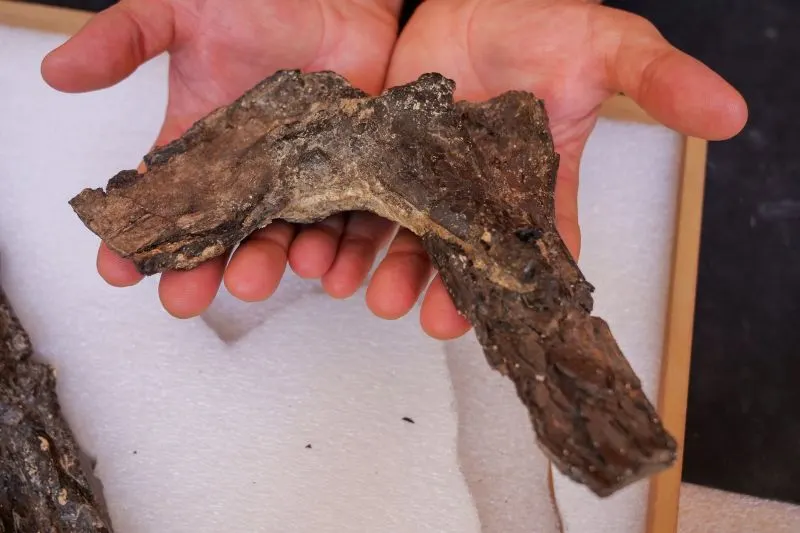
A study published in the Proceedings of the National Academy of Sciences reports microscopic structures resembling red blood cells inside a leg bone of Aratasaurus, a small meat-eating dinosaur that lived about 115 million years ago in what is now Brazil. According to the study’s authors, chemical tests detected heme, the molecule that carries oxygen in blood, within those structures, which they describe as the first such detection in a dinosaur fossil. Similar structures reported in earlier studies have been debated, because soft biological tissue rarely survives fossilization. Co-author Kliti Grice of Curtin University called the finding a landmark discovery.
Headline and summary written by Mantle’s AI from the coverage below, under published rules. Editors read every story. How this works
What happened
Key points
Each point shows who reports it, from Far Left to Far Right.
Researchers report microscopic structures resembling red blood cells in a 115-million-year-old dinosaur bone.
Reported byLeft2Right1See the outletsHide the outlets
- Left
- The Guardian, CNN
- Right
- New York Post
According to the study’s authors, chemical tests detected heme, the oxygen-carrying molecule found in blood, within the structures themselves.
Reported byLeft2Right1See the outletsHide the outlets
- Left
- The Guardian, CNN
- Right
- New York Post
The findings were published in the Proceedings of the National Academy of Sciences.
Reported byLeft1Right1See the outletsHide the outlets
- Left
- CNN
- Right
- New York Post
The bone came from a small meat-eating dinosaur, Aratasaurus, that lived in what is now Brazil.
Reported byLeft1Right1See the outletsHide the outlets
- Left
- The Guardian
- Right
- New York Post
Soft tissue rarely survives fossilization, and earlier reports of similar structures have been fiercely debated.
One side only: the leftReported byLeft2See the outletsHide the outlets
- Left
- The Guardian, CNN
Co-author Kliti Grice of Curtin University called the finding a landmark discovery.
One outletNew York Post· Right
How each side tells it
Compare views
Left- and right-leaning outlets agree researchers report red blood cell structures and heme in a 115-million-year-old dinosaur bone. The left stresses the claim’s debated status and scientific implications, while the right calls it a landmark and links it to the search for life.
the left
2 outlets
Left-side headlines attribute the find to scientists and hedge it with “say scientists” or “say they’ve found”, stressing its strength or the claim’s status rather than stating it as settled.
Fossilised red blood cells found in 115m-year-old dinosaur’s bone, say scientists
The GuardianLeftAll left-leaning headlines the center
No coverage yet
No center outlet that Mantle follows has covered this story yet. That absence is part of the picture.
the right
1 outlet
The right-side headline states the find as fact, leads with a quoted “Landmark discovery” and links it to the search for life elsewhere in the cosmos.
‘Sensational language“Landmark discovery”The headline gives the scientist’s own praise prominence, which pushes the story toward a stronger verdict than the study alone supports.More neutral: a significant finding, according to a co-authorThese are Kliti Grice’s words. The outlet is reporting them.Disagree with this highlight?:’ Dinosaur blood found in fossils for the first time — and it could advance search for life in the cosmos
New York PostRightAll right-leaning headlines
The words they chose
Language to notice
Words that carry a judgement beyond the facts. Tap a highlighted word anywhere on the page to see why.
Left1
Jurassic Park rip-off
Center
Has not covered this story.
Right1
rewriting our understanding
In the outlets’ own words
Sensational language
Jurassic Park rip-offMore neutral: a discovery that, if confirmed, would be unusual
The comparison to a film adds a mocking, dramatic tone that is not needed to report the find.
…haemoglobin in blood to carry oxygen around body It could be the opening of a Jurassic Park rip-off: scientists examining ancient dinosaur bones find what appear to be fossilised…
Used byThe Guardian (Left)
Sensational language
rewriting our understandingMore neutral: changing how scientists understand fossil preservation
It presents one study as overturning a whole field before other researchers have assessed it.
…have identified fossilized blood in dinosaur bones for the first time, rewriting our understanding of fossil preservation — and even suggesting that similarly delicate traces…
Used byNew York Post (Right)
Words quoted from someone else (1)Hide the quoted words
Loaded words that outlets reported someone else saying. They show what was said, not how the outlet chose to say it.
Sensational language
QuotedLandmark discoveryMore neutral: a significant finding, according to a co-author
The headline gives the scientist’s own praise prominence, which pushes the story toward a stronger verdict than the study alone supports.
‘Landmark discovery:’ Dinosaur blood found in fossils for the first time — and it could advance…
Quoted byNew York Post (Right)
These are Kliti Grice’s words. The outlets are reporting them.
See for yourself
Side by side
What each side leads with and what it leaves out. Open a side to read its headlines.
From the left
2 outletsLeads with
- scientists’ claims and their controversy
- red blood cell structures and heme
- new avenues for dinosaur biology
Leaves out
- the suggested link to life beyond Earth
Reported by other sides, not found in this side’s coverage.
See the 2 headlines from the leftHide the headlines
- CNNLeft
Scientists say they’ve found the strongest evidence yet of red blood cells in a dinosaur bone
Traces of prehistoric blood could reveal unprecedented clues about dinosaur biology, but they’ve been notoriously difficult to confirm. Now, researchers studying a 115 million-year-old dinosaur bone say they’ve found the strongest evidence yet of red blood cells in a fossil. …
- The GuardianLeft
Fossilised red blood cells found in 115m-year-old dinosaur’s bone, say scientists
Chemical tests on Aratasaurus bone identify presence of heme, the organic compound that allows haemoglobin in blood to carry oxygen around body It could be the opening of a Sensational language“Jurassic Park rip-off”The comparison to a film adds a mocking, dramatic tone that is not needed to report the find.More neutral: a discovery that, if confirmed, would be unusualDisagree with this highlight?: scientists examining ancient dinosaur bones find what appear to be fossilised red …
From the center
0 outletsNo center outlet that Mantle follows has covered this story yet. That absence is part of the picture.
From the right
1 outletLeads with
- “landmark discovery” framing
- first detection of heme in a dinosaur fossil
- possible links to life beyond Earth
Leaves out
- the scientific debate over whether such structures are real
Reported by other sides, not found in this side’s coverage.
See the headline from the rightHide the headlines
- New York PostRight
‘Sensational language“Landmark discovery”The headline gives the scientist’s own praise prominence, which pushes the story toward a stronger verdict than the study alone supports.More neutral: a significant finding, according to a co-authorThese are Kliti Grice’s words. The outlet is reporting them.Disagree with this highlight?:’ Dinosaur blood found in fossils for the first time — and it could advance search for life in the cosmos
Australian scientists have identified fossilized blood in dinosaur bones for the first time, Sensational language“rewriting our understanding”It presents one study as overturning a whole field before other researchers have assessed it.More neutral: changing how scientists understand fossil preservationDisagree with this highlight? of fossil preservation — and even suggesting that similarly delicate traces of life exist elsewhere in the cosmos. …
The stories you read build My Mix, a private picture of which sides cover the stories you choose, kept on this device. What is My Mix?
The left is Far Left and Left together. The right is Right and Far Right together. Every outlet keeps its own five-point rating.
Who reported it when
How the coverage built up
Left
First to report
The Guardian, Nov 2, 3:00 PM EST
Center
No report yet
From the outlets Mantle follows
Right
18 hr 42 min later
Its first report, Nov 3, 9:42 AM EST
See the order the outlets reported inHide the order
- The GuardianLeftNov 2, 3:00 PM EST
- CNNLeftNov 3, 9:09 AM EST
- New York PostRightNov 3, 9:42 AM EST
Times are the ones the outlets published in their own feeds, in Eastern time. Opinion is left out.
Read next
More on Science
ScienceDeveloping
NASA’s Swift Observatory is expected to fall back to Earth after a rescue attempt
6 outletsQuiet on the right
3 outlets
25 outlets
Next in today’s stories
Military & SecurityDeveloping
US strikes Iran’s Qeshm Island a day before midterm elections, officials say
35 outlets
A story one side mostly skipped
PoliticsBreaking
Trump says he would offer preemptive pardons to aides if Democrats win Congress
11 outletsQuiet in the center